
Water stains on the ceiling below a balcony, recurring dampness near a door threshold, loose outdoor tiles or white deposits that keep returning can all be warning signs of a moisture problem. They may be associated with signs of balcony waterproofing failure, but none of these symptoms proves that the membrane has failed.
A balcony can have several possible sources of water ingress, including drainage issues, gaps at junctions, plumbing, damaged grout or a defect in the waterproofing system. The useful first step is to document what you can see, note when it happens, and arrange an assessment if the signs persist, spread or affect the area below.
Common signs to look for
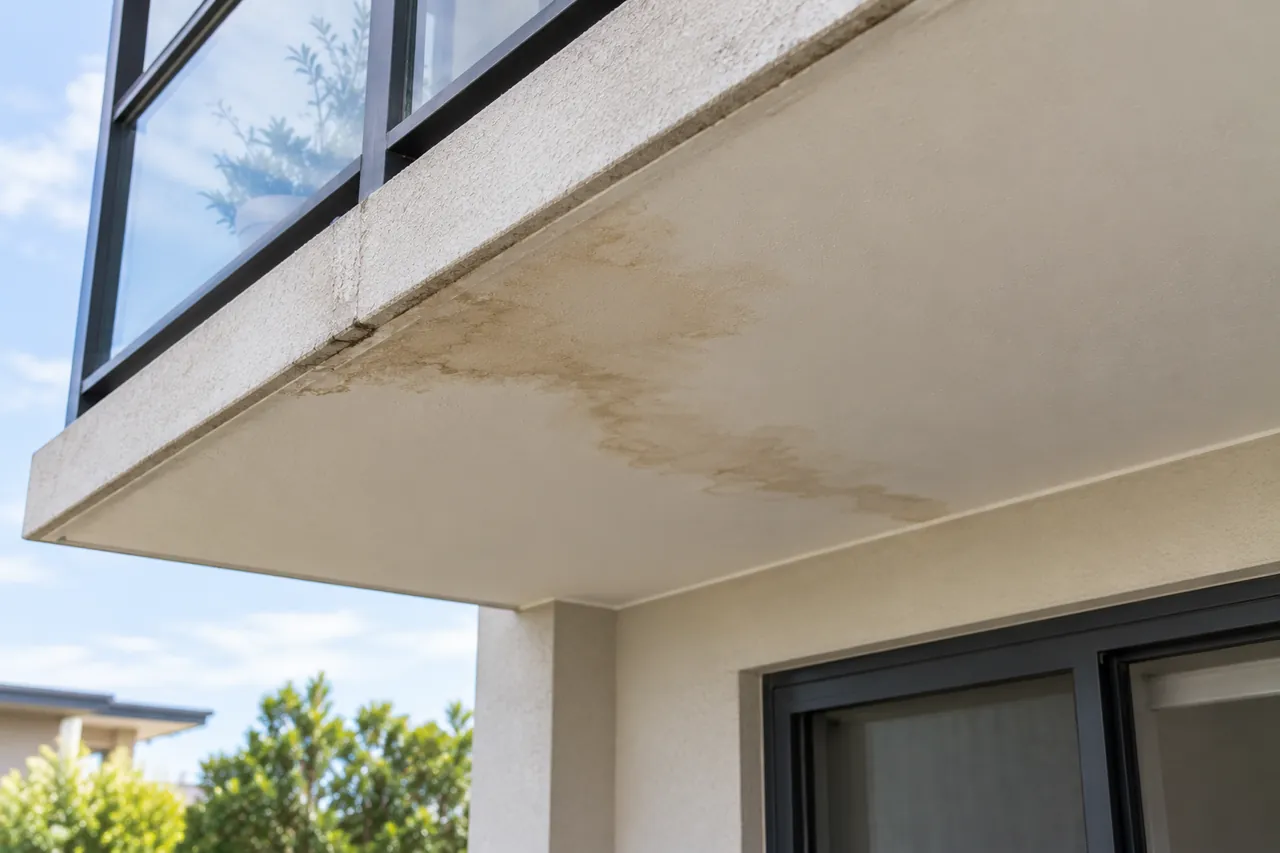
1. Water stains on the ceiling or underside of the balcony
A brown mark, peeling paint or damp patch on the ceiling below an upper-level balcony is worth investigating—especially if it becomes more noticeable after rain or when the balcony has been wet.
Water stains under a balcony can be linked to water entering through the balcony assembly, but the stain alone cannot identify the source. Water may travel along building materials before it becomes visible, so the location of the mark may not line up directly with the entry point.
If water is actively dripping, the ceiling is sagging or bulging, or the affected area is near electrical fittings, keep clear and seek urgent professional advice.
2. Dampness near a balcony door or threshold
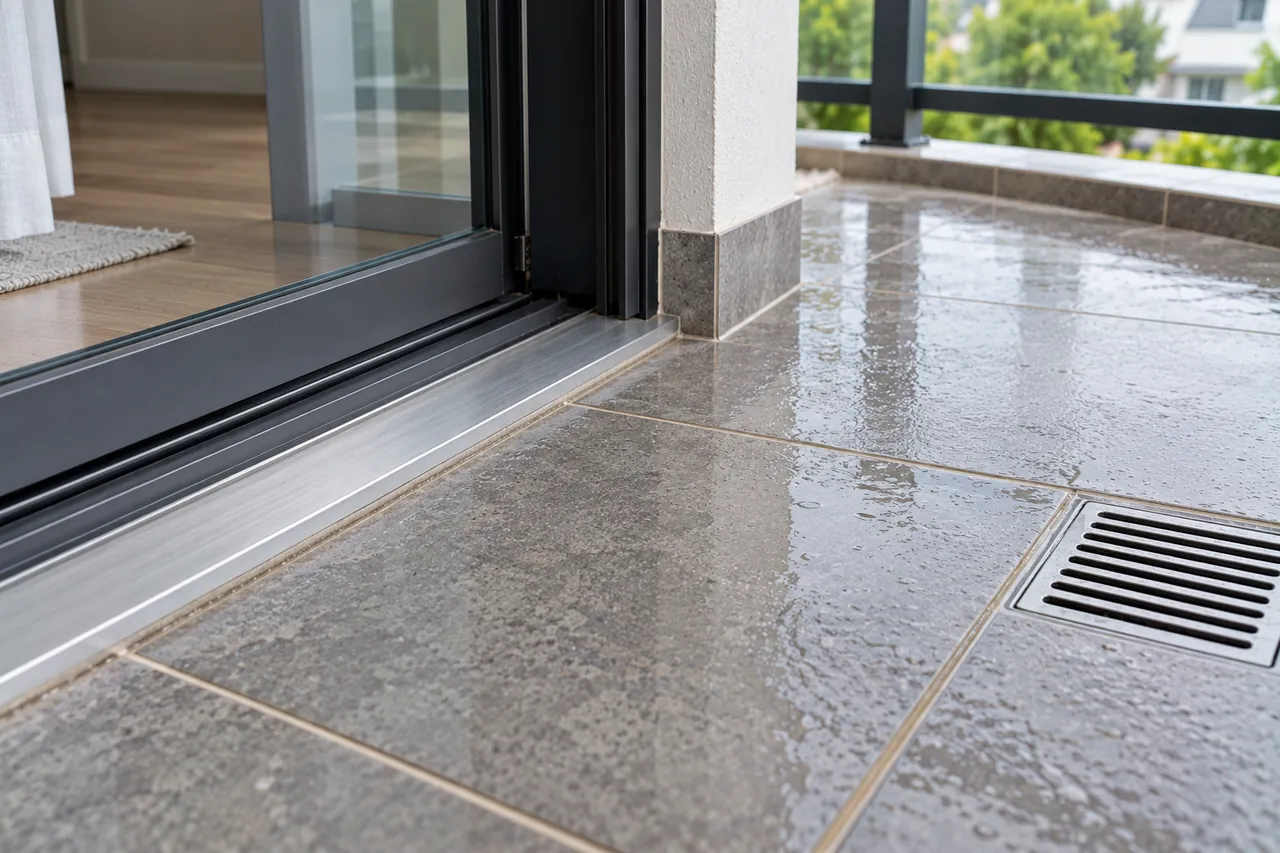
Moisture near a door threshold, along the wall beside the balcony, or at an internal floor edge can indicate that water is not being kept out of the building as intended.
Possible causes include a junction detail, sealant condition, drainage or falls, or a problem within the waterproofing system. The threshold is an important area to observe, but dampness there does not automatically mean the membrane has failed.
Note whether the problem appears after rain, whether water pools near the door, and whether internal finishes are changing over time.
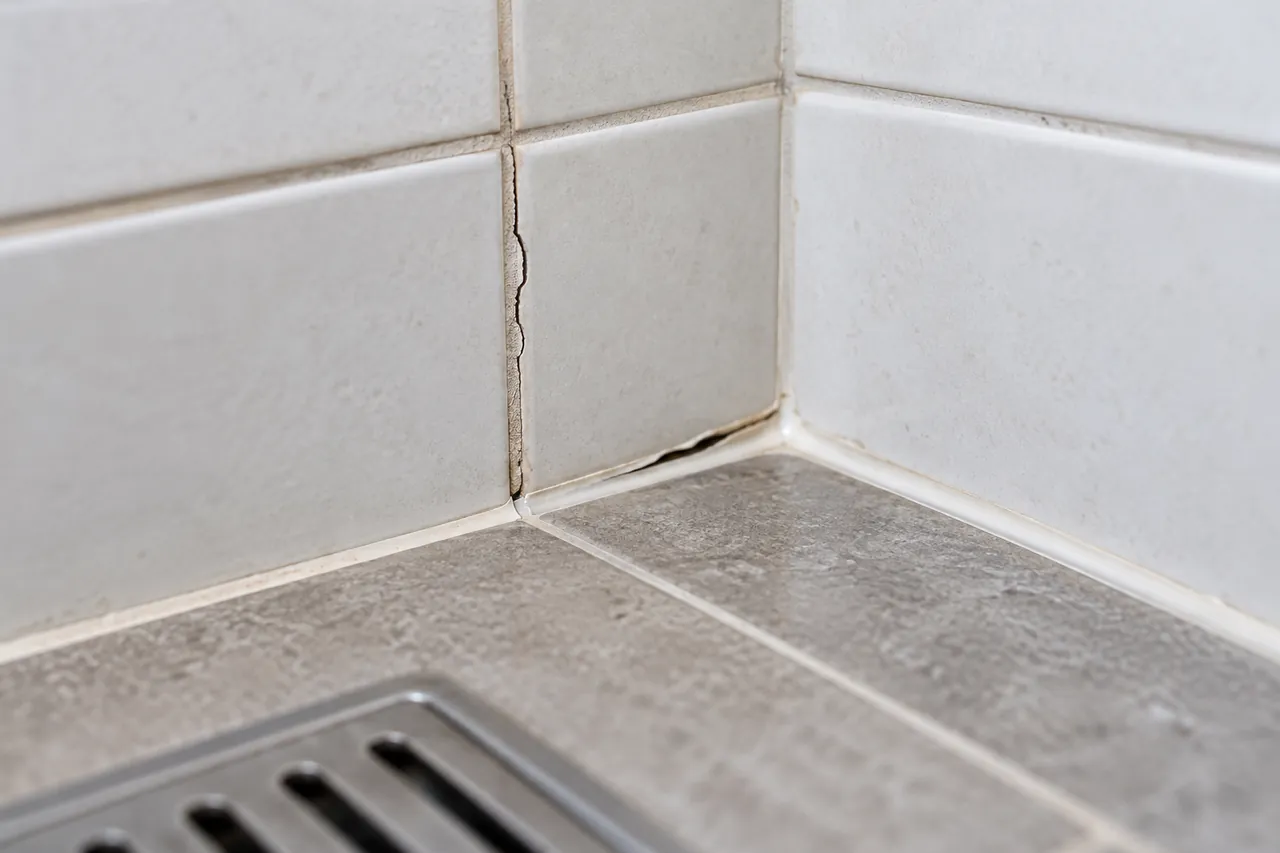
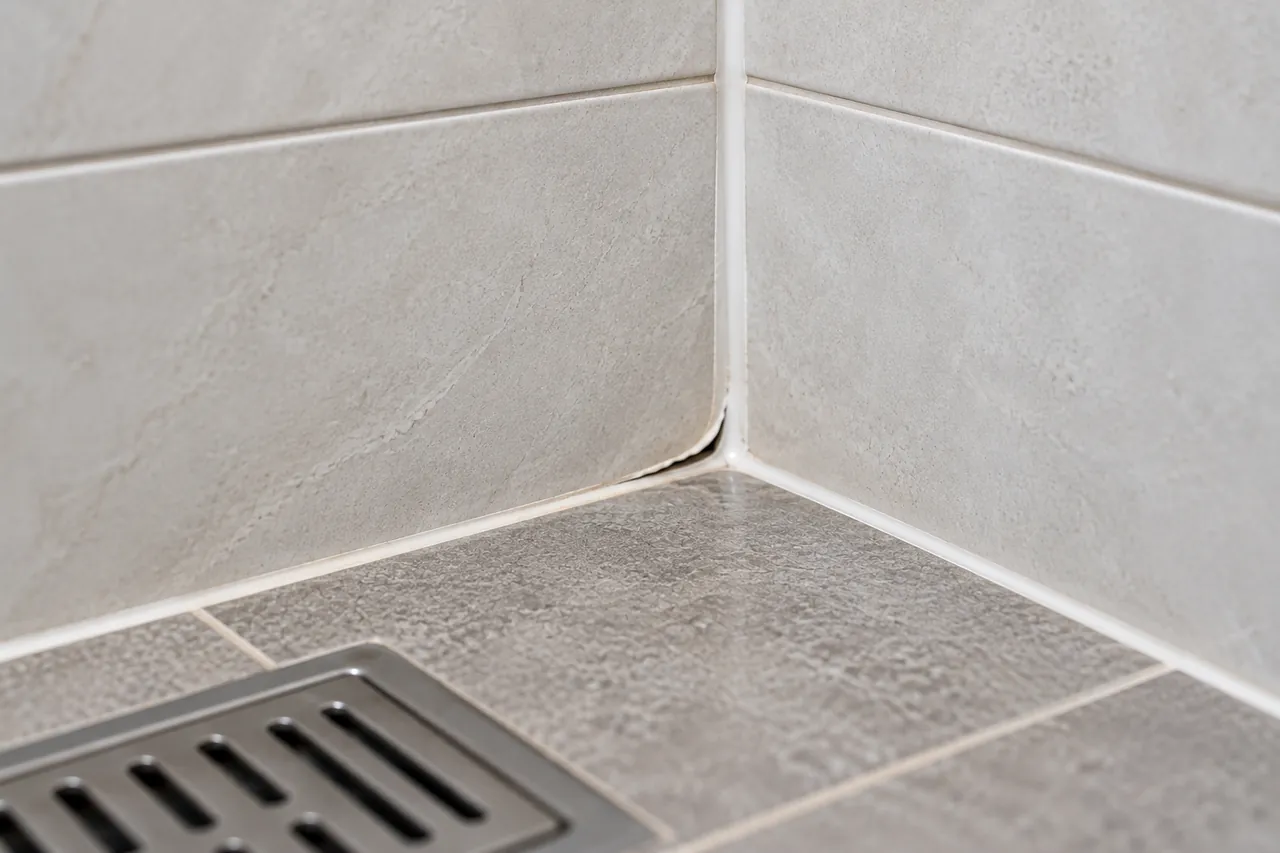
3. Cracked grout or deteriorating joints
Cracked, missing or deteriorated grout can allow water to move into the layers beneath the tile surface more easily. However, grout is not the waterproofing membrane, and a crack does not prove that the membrane has failed.
Grout can crack for several reasons, including movement, wear or installation issues. If damaged joints appear alongside recurring dampness, loose tiles or stains below the balcony, it is sensible to investigate the wider situation rather than simply filling the visible gap.
4. Loose, lifting or cracked balcony tiles
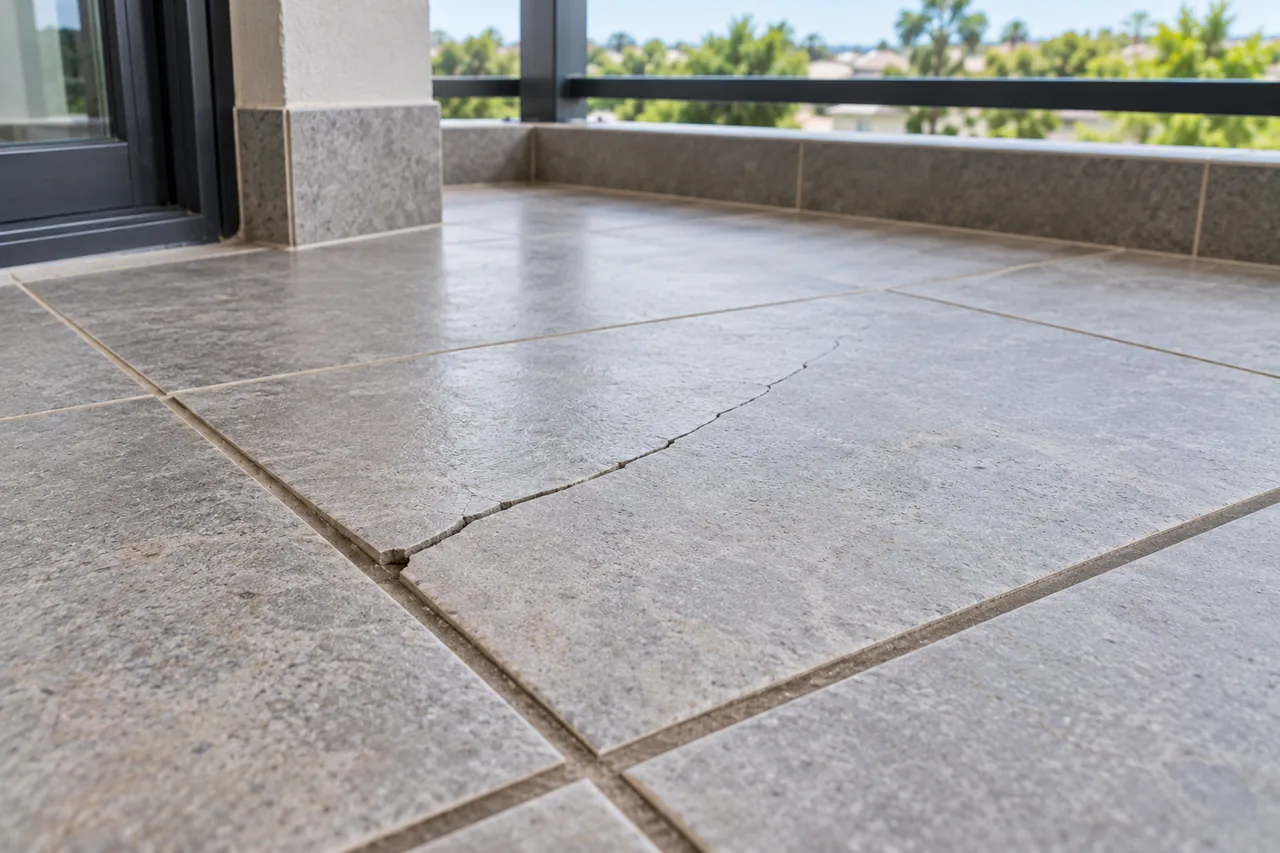
Tiles that move, lift, sound hollow or crack may indicate a problem with the tile bond or the materials beneath them. Moisture can be one possible factor, but movement and other installation or substrate issues can also contribute.
Do not assume that every loose tile means the waterproofing membrane has failed. Equally, replacing the visible tile without understanding why it moved may leave the underlying issue unresolved. The appropriate repair depends on what is found and how the balcony is constructed.
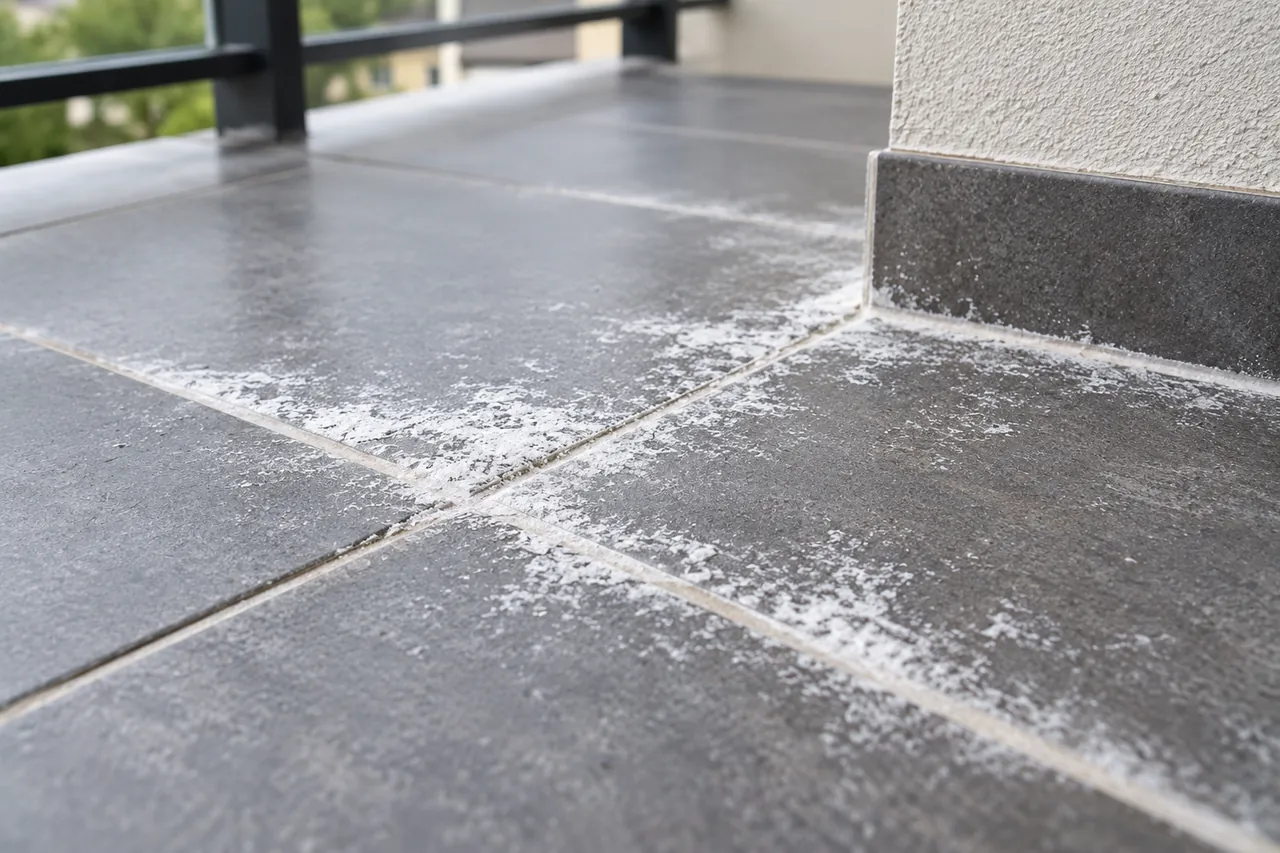
5. White powder or salt-like deposits on the tiles
White, chalky residue on outdoor tiles or grout may be efflorescence. It can form when moisture moves through a material and leaves dissolved salts at the surface as it evaporates.
Balcony efflorescence can be a clue that moisture is moving through the area, particularly if it returns after cleaning or wet weather. It is not proof of a failed membrane, and similar-looking deposits can have other causes.
For a fuller explanation, see our article on white powder on balcony tiles.
6. Water that pools or drains slowly
After rain, observe whether water remains in the same area for an unusually long time or collects near a doorway, wall junction or drainage outlet. Poor drainage, blocked outlets or inadequate falls may contribute to ongoing moisture, depending on the balcony's design.
Pooling does not confirm membrane failure, but it can be a reason to investigate drainage and water movement. Do not deliberately flood the balcony to test it.
7. Dampness or damage inside adjoining rooms
If the room beside or below a balcony develops a recurring damp smell, bubbling paint, discolouration or damaged plaster, the balcony may be one possible source of the moisture. Plumbing, condensation and other building issues can cause similar symptoms.
Consider the location and timing of the damage, and whether it changes after rainfall. Avoid opening walls or ceilings to investigate unless it is safe and appropriate to do so.
Surface defects versus a possible membrane problem
Not every balcony issue requires the same repair. A surface-joint defect, a drainage problem and a damaged waterproofing membrane are different issues, even though they may produce overlapping symptoms.
| What you observe | What it may indicate | What it does not prove |
|---|---|---|
| Cracked grout | Worn joints, movement or a possible water-entry path | That the membrane has failed |
| Separated sealant at a junction | A joint that may need attention | That the membrane beneath the whole balcony is defective |
| White salt-like deposits | Moisture movement and possible efflorescence | The exact source of moisture or membrane failure |
| Loose or lifting tiles | A problem with the tile bond or underlying materials | That water is necessarily the cause |
| Staining on the ceiling below | Water ingress from a possible source above or nearby | That the balcony membrane is the only possible source |
| Water pooling after rain | A possible drainage or falls issue | That waterproofing is definitely defective |
The pattern matters. Several symptoms occurring together, or damage that keeps returning after a surface repair, may justify a more detailed assessment. The membrane should not be diagnosed from a single photograph or symptom.
Does cracked grout cause a balcony leak?
Cracked grout can provide a route for water to move below the tile surface, but it is not the only possible cause of a leak. The waterproofing system is a separate layer within the balcony construction, and its condition cannot be established simply by looking at the grout.
If the grout is damaged but there are no other symptoms, the repair may be relatively localised. If the same area also has loose tiles, recurring dampness or staining underneath, the wider assembly and drainage should be considered before choosing a repair.
Does the whole balcony need to be retiled?
Not always. The repair scope depends on the source of the moisture, the condition of the tiles and substrate, the design of the balcony, and the extent of any waterproofing defect.
A localised joint or drainage issue may need a different response from a confirmed membrane problem beneath a tiled finish. In some cases, access to the layers below the tiles may be required; in others, a broader rebuild may be unnecessary. An assessment should explain why the proposed scope is appropriate and what it includes.
Be cautious of both extremes: a promise that a surface coating will solve every leak, and a recommendation to remove every tile without a clear explanation. Ask what evidence supports the proposed repair and what would happen if further damage is found.
What to document before arranging an assessment
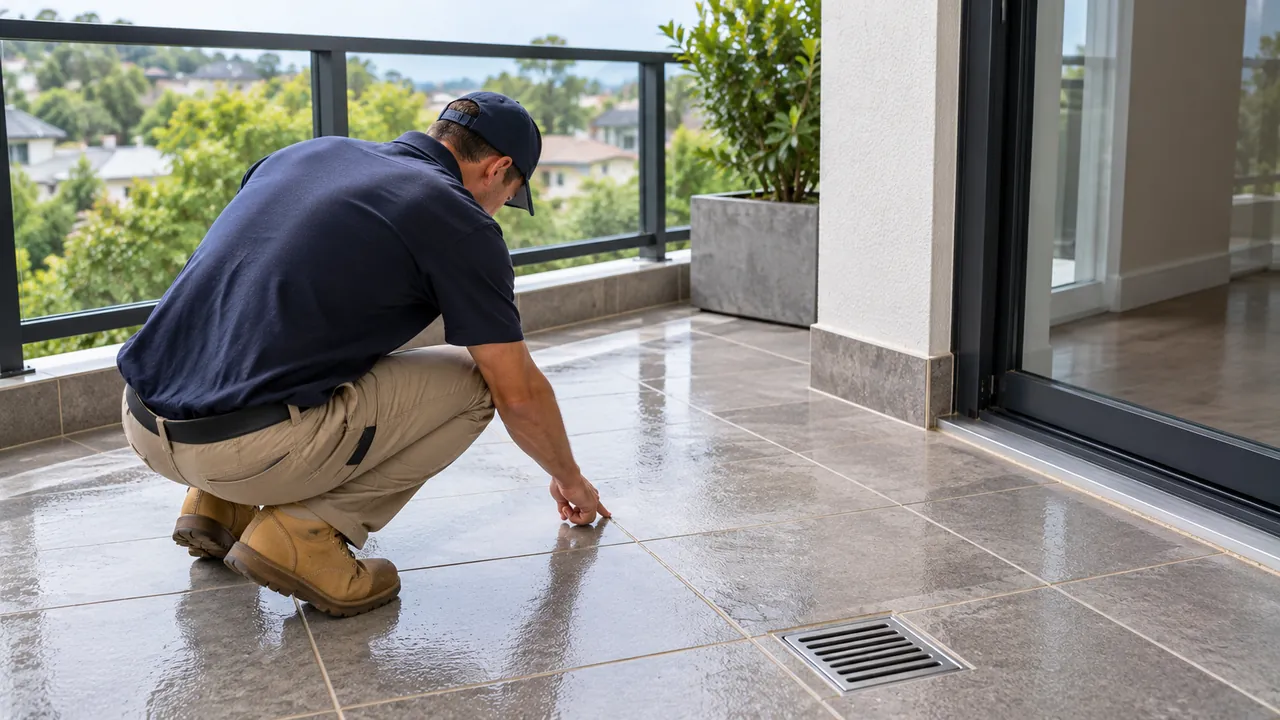
Good notes help a homeowner, landlord, property manager or owners corporation explain the problem clearly.
- Take photos. Capture close-ups of cracked grout, loose tiles, white deposits or damaged sealant, plus wider views showing where they occur.
- Photograph the area below. If there are ceiling or wall stains, document their location and how they change over time.
- Record dates and weather. Note whether the signs appeared after rain, during a dry period, or after a previous repair.
- Describe pooling and drainage. Record where water remains after ordinary rainfall; do not add water deliberately as a test.
- List previous repairs. Include what was repaired, approximately when, and whether the symptoms returned.
- Identify affected areas. Note whether the issue is limited to the balcony or also affects a room, ceiling, wall or neighbouring property.
For an apartment building or shared property, notify the relevant property manager, owners corporation or strata representative in line with the building's process. Responsibilities can depend on the property's ownership arrangements and governing documents, so do not assume that the balcony is solely an individual owner's responsibility.
When should balcony waterproofing be assessed?
Arrange an assessment if you notice recurring water stains below the balcony, dampness at a threshold, loose or lifting tiles, repeated white deposits alongside other moisture signs, or persistent pooling and drainage concerns.
Seek prompt advice if the affected area is spreading or water is actively entering the building. If a ceiling is sagging or bulging, or water is near electrical fittings, keep clear and treat the situation as urgent.
For homeowners and property managers in Melbourne and Geelong, EverSeal's balcony waterproofing service is the relevant starting point for discussing a suspected moisture or waterproofing issue. General waterproofing services may also be relevant depending on the location and likely cause. The recommended repair should follow an assessment and a clear explanation of the work proposed.
Frequently asked questions
What are the signs of balcony waterproofing failure?
Recurring dampness, water stains below the balcony, loose tiles, deteriorating joints, repeated white deposits and persistent pooling can be warning signs of a moisture problem. These symptoms do not confirm membrane failure individually; the source needs to be assessed.
Why is the ceiling below my balcony stained?
Water may be entering from the balcony or a nearby junction, but plumbing and other sources can cause similar staining. Water can travel through building materials before becoming visible. Photograph the stain, note when it changes and arrange an assessment, particularly if it is spreading.
Can cracked balcony tiles cause a leak?
Cracked tiles may allow more water to reach the layers beneath the tile surface, depending on the construction and condition of the system. However, a crack does not prove the membrane has failed, and the source of any leak may be elsewhere.
Does white powder on balcony tiles mean the waterproofing has failed?
No. The residue may be efflorescence caused by moisture moving through a material and leaving salts at the surface. It can be a useful clue, but it does not establish the source of moisture or prove membrane failure. See our guide to white powder on balcony tiles.
Is balcony membrane replacement always necessary?
No. The repair depends on what is causing the problem and the condition of the balcony assembly. A drainage or joint issue may need a different response from a confirmed membrane defect. Ask for the reasoning and scope in writing before agreeing to work.
What should a property manager or owners corporation do if a balcony is leaking?
Document the affected areas with photos and dates, note any rainfall or recurring patterns, and arrange an appropriate assessment. Notify the relevant building representative and follow the property's established process. Confirm responsibility and the approval process before work begins, as these can vary by property and governing arrangements.
Who can assess balcony waterproofing in Melbourne or Geelong?
Contact a suitably qualified professional with relevant experience in the type of balcony and suspected issue. Share the photos, dates, previous repair history and any damage below the balcony. EverSeal's balcony waterproofing page provides the relevant service information.