
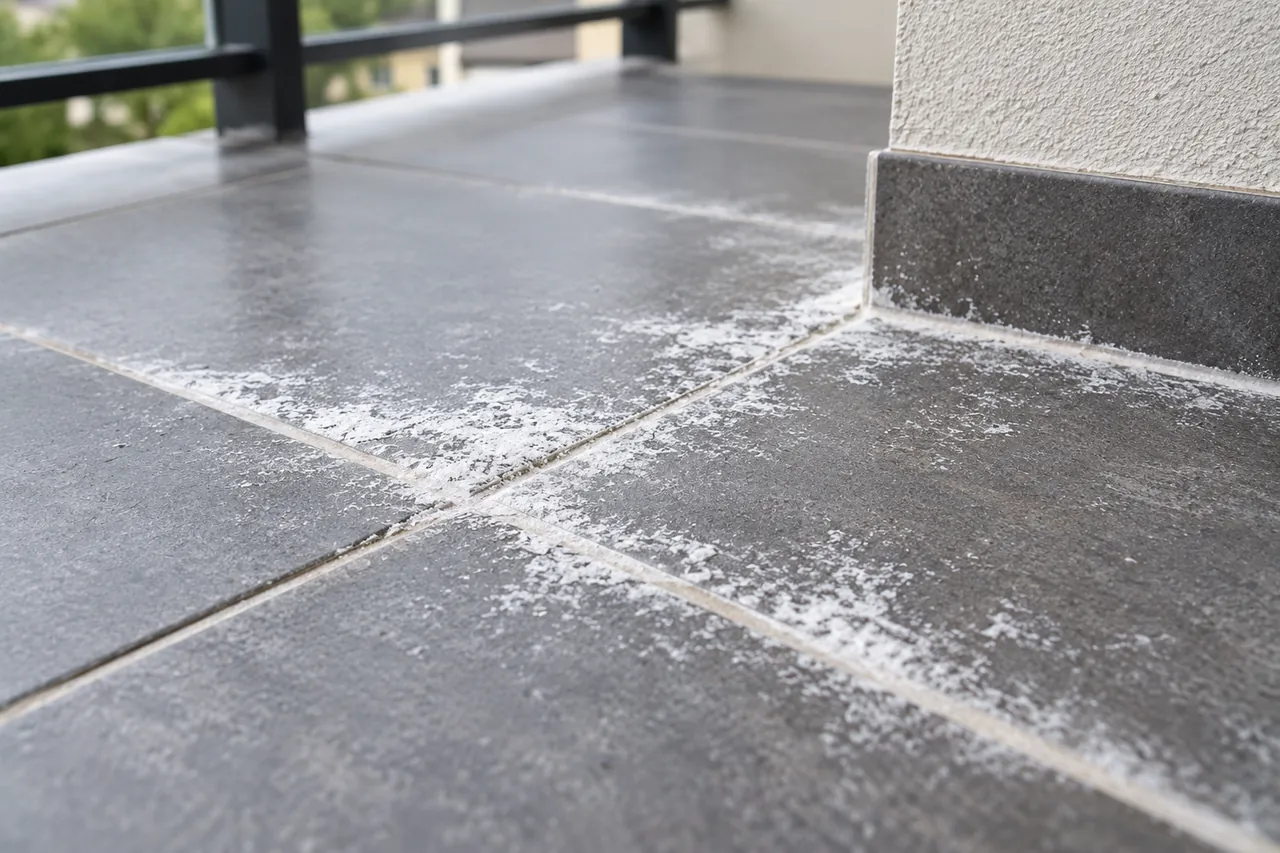
If you have noticed white powder on balcony tiles, you may be looking at a deposit called efflorescence. It often appears as a chalky or salt-like residue on tiles, grout or nearby masonry. It can form when moisture moves through a material and brings dissolved salts to the surface. As the moisture evaporates, the salts remain behind.
Efflorescence is not automatically a sign that your balcony waterproofing has failed. It can, however, be a useful clue that moisture is moving through the area. If the deposits keep returning, appear alongside damaged grout or tiles, or occur with water stains below the balcony, it is worth looking beyond the surface residue.
What is efflorescence?
Efflorescence is a pale deposit of soluble salts that can appear on masonry, grout, concrete and other building materials. Moisture dissolves salts within or behind the material, carries them towards the surface and then evaporates, leaving a visible residue.
On a tiled balcony, you might notice it:
- Along grout lines between tiles.
- Near the edge of a tiled surface or balcony threshold.
- Around areas where water tends to collect or drain slowly.
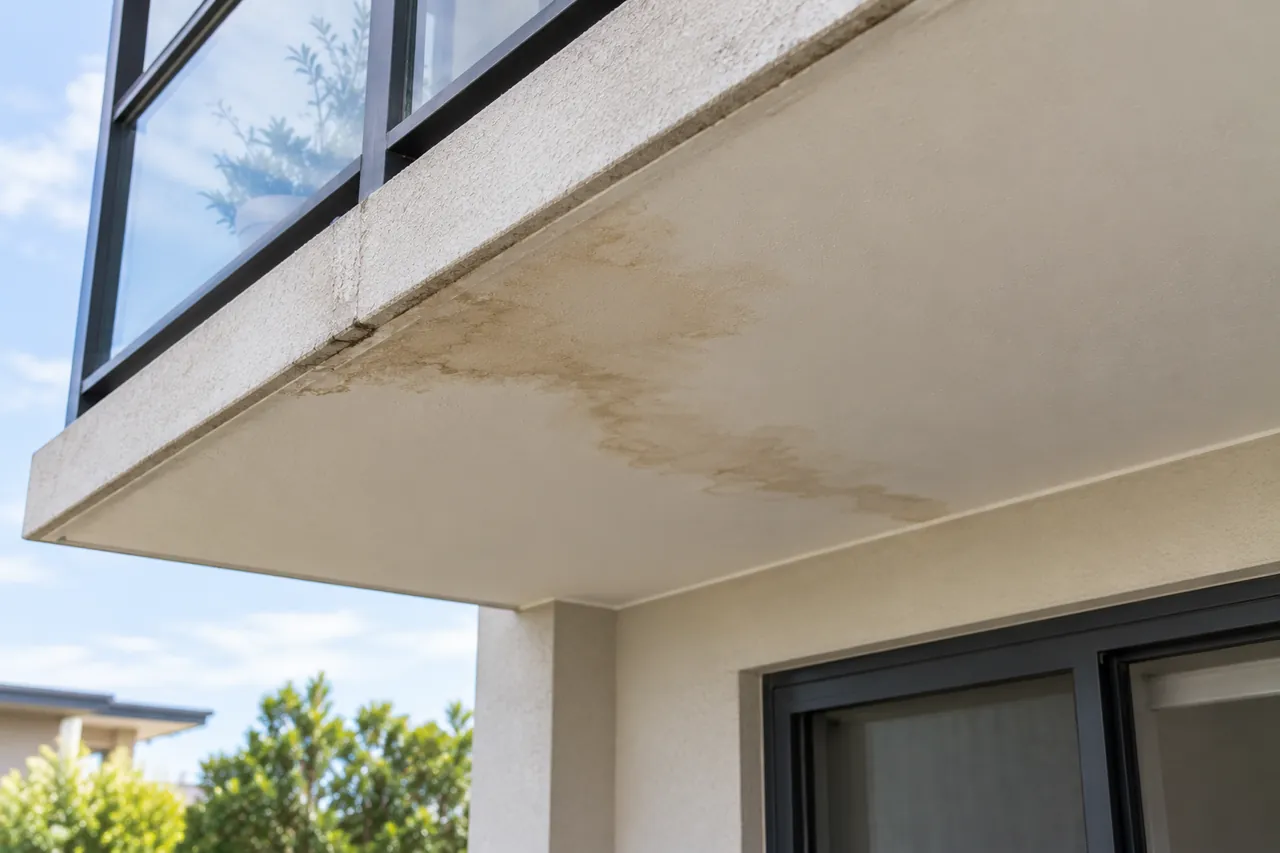
- On nearby masonry or the underside of a balcony, depending on the construction and moisture path.
The appearance can range from a light dusty film to thicker, crusty patches. It may be easier to see after wet weather or once the surface begins to dry.
Efflorescence describes the deposit itself. It does not identify the exact source of the moisture or prove that the waterproofing membrane is damaged.
Why does white salt appear on balcony tiles?
For efflorescence to form, soluble salts and moisture need to be present, and the moisture must be able to move towards a surface where it can evaporate. Several conditions may contribute.
Moisture moving through grout or surrounding materials
Rainwater, retained moisture or moisture within the materials beneath a tiled surface can help move dissolved salts towards the surface. As the area dries, a white deposit may be left behind.
The presence of residue does not tell you exactly where the water entered or how far it travelled. The source may not be directly behind the spot where the deposit appears.
Water that does not drain away effectively
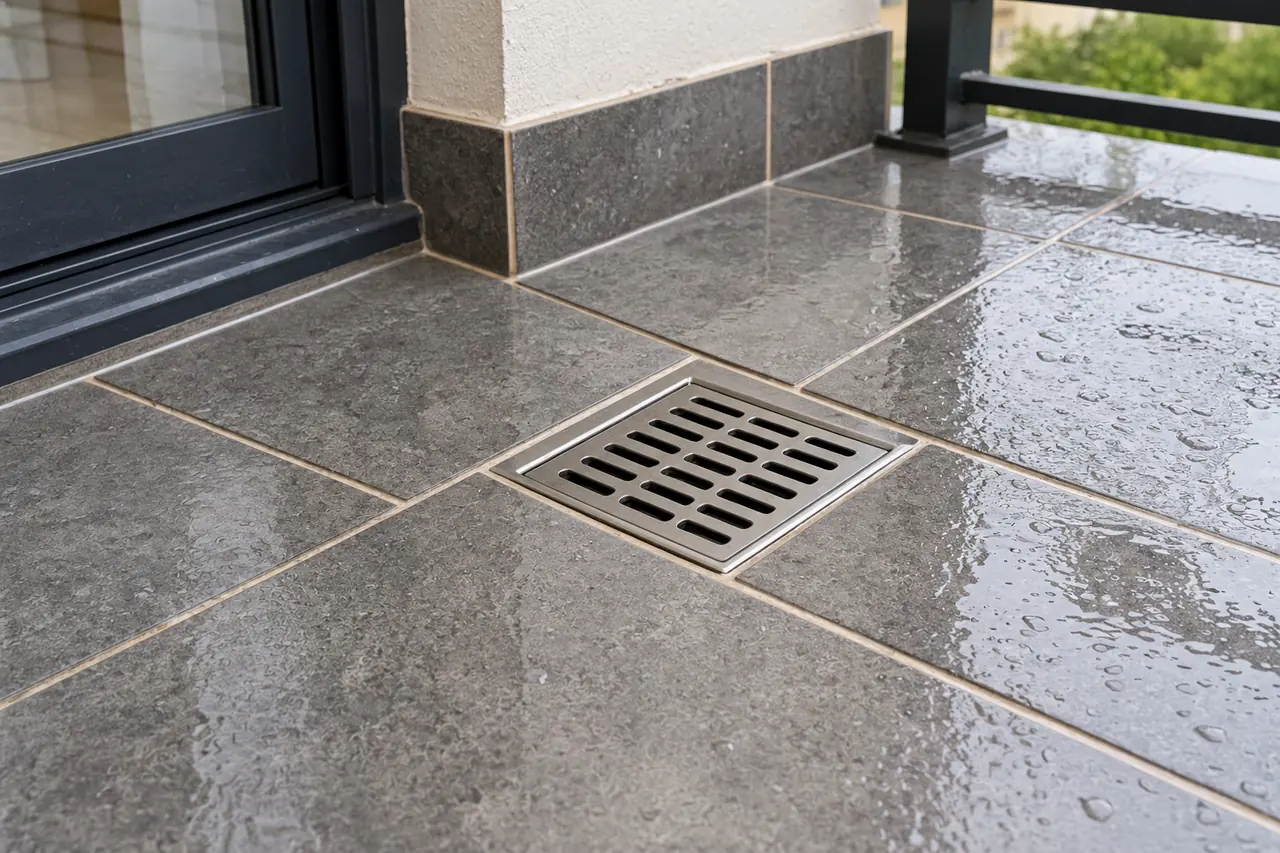
If water regularly sits on a balcony or near an outlet, the area may remain damp for longer. Drainage problems, blocked outlets, poor falls or details around thresholds can contribute to ongoing moisture, depending on the balcony's design.
Do not assume the drainage is faulty just because efflorescence is present. Look for repeated pooling or slow drainage, and have any persistent concern assessed.
Moisture within the tiled balcony assembly
A tiled balcony is more than the visible tile surface. Depending on its construction, there may be grout, adhesive, a screed or other substrate, and a waterproofing system beneath the finish. Moisture movement within these materials can contribute to surface deposits.
A balcony membrane may need attention if there are other signs of water ingress, but white deposits alone do not prove membrane failure. The condition of the whole area matters.
Is efflorescence mould or ordinary dirt?
Not necessarily. White residue can have different causes, and appearance alone is not always enough to identify it confidently.
| What you notice | What it may suggest | Important limitation |
|---|---|---|
| Dry, chalky or salt-like white residue | Efflorescence may be present | Appearance alone cannot confirm its composition or source |
| Dirt or residue that follows foot traffic or general use | Surface grime may be contributing | Some deposits can resemble dirt |
| Patchy growth or residue with a different texture | Another surface issue may be present | Do not label it mould or efflorescence without adequate evidence |
| White deposits that return after cleaning or wet weather | Ongoing moisture movement may be contributing | It does not prove a failed waterproofing membrane |
If you are unsure what the material is, avoid aggressive cleaning or mixing chemicals to test it. A professional can assess the wider conditions if the residue is persistent or accompanied by other signs of moisture.
Why does the white powder come back after cleaning?
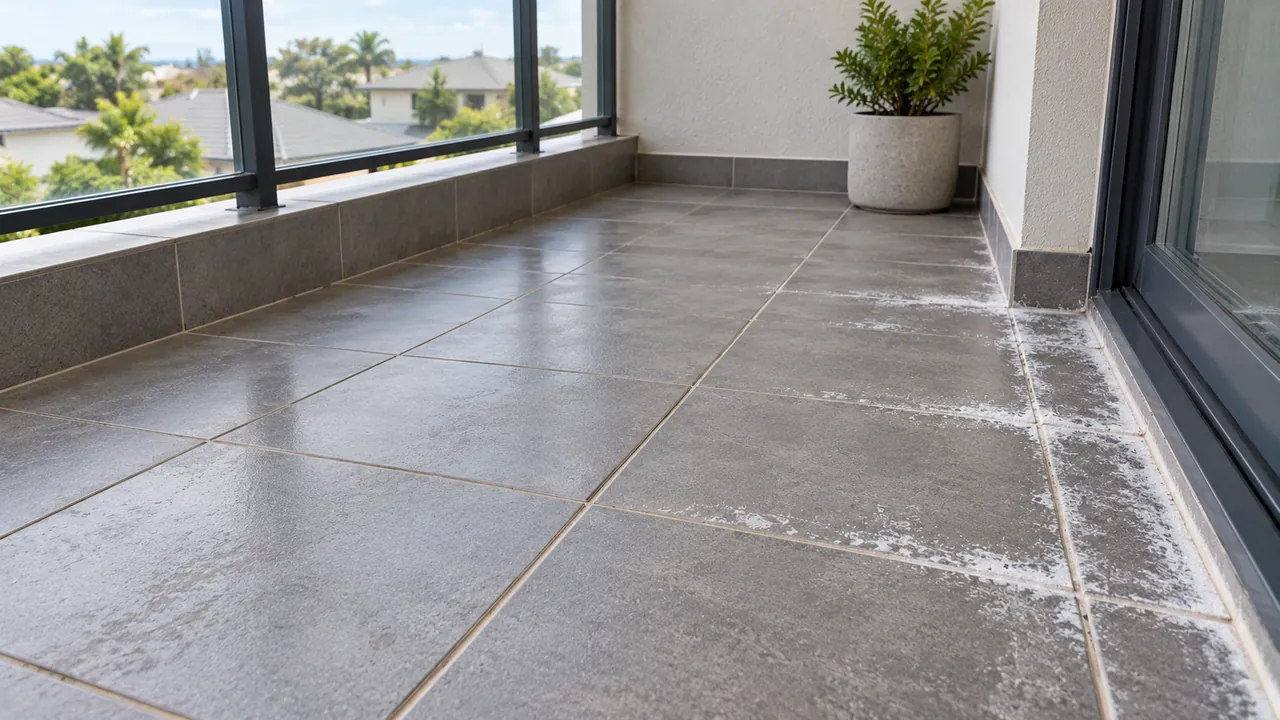
Cleaning removes the visible deposit, but it may not change the conditions that caused it to form. If moisture continues to move through the material and carry salts to the surface, the residue can return as the area dries.
For example, imagine a balcony that develops white marks after several wet days. The owner brushes the residue away, but it appears again after the next period of rain. That pattern suggests the moisture conditions deserve attention. It does not, by itself, identify whether the source is drainage, retained moisture, the balcony construction or a waterproofing issue.
Repeated deposits are a reason to look for the underlying conditions—not simply to clean the same spot over and over.
Can I clean efflorescence from balcony tiles myself?
For a light deposit on a surface that is otherwise sound, you may be able to start with a gentle, dry removal method that is appropriate for the tile finish. Check the tile and grout manufacturer's care guidance first, and test any permitted cleaning method in a small, inconspicuous area.
Keep these precautions in mind:
- Avoid harsh acids, abrasive tools and unverified chemical mixtures. They can damage tiles, grout, metal fittings or nearby finishes.
- Do not mix cleaning products.
- Avoid pressure washing unless the surface and construction are known to be suitable for it; forcing water into joints may worsen a moisture issue.
- Do not seal over the deposit without understanding the product requirements and whether moisture is still present.
- If tiles are loose, grout is breaking away, water is pooling, or staining appears below the balcony, address those concerns rather than focusing only on cleaning.
Cleaning may improve the appearance, but it does not repair a drainage fault or a possible waterproofing problem.
Does efflorescence mean the balcony is leaking?
No. Balcony efflorescence can indicate that moisture has moved through a material, but it does not prove that water is leaking into the building or that the balcony membrane has failed.
The concern becomes more significant when the deposits appear with other symptoms, such as:
- Water stains or damp patches on the ceiling or wall below the balcony.
- Repeated pooling or slow drainage after rain.
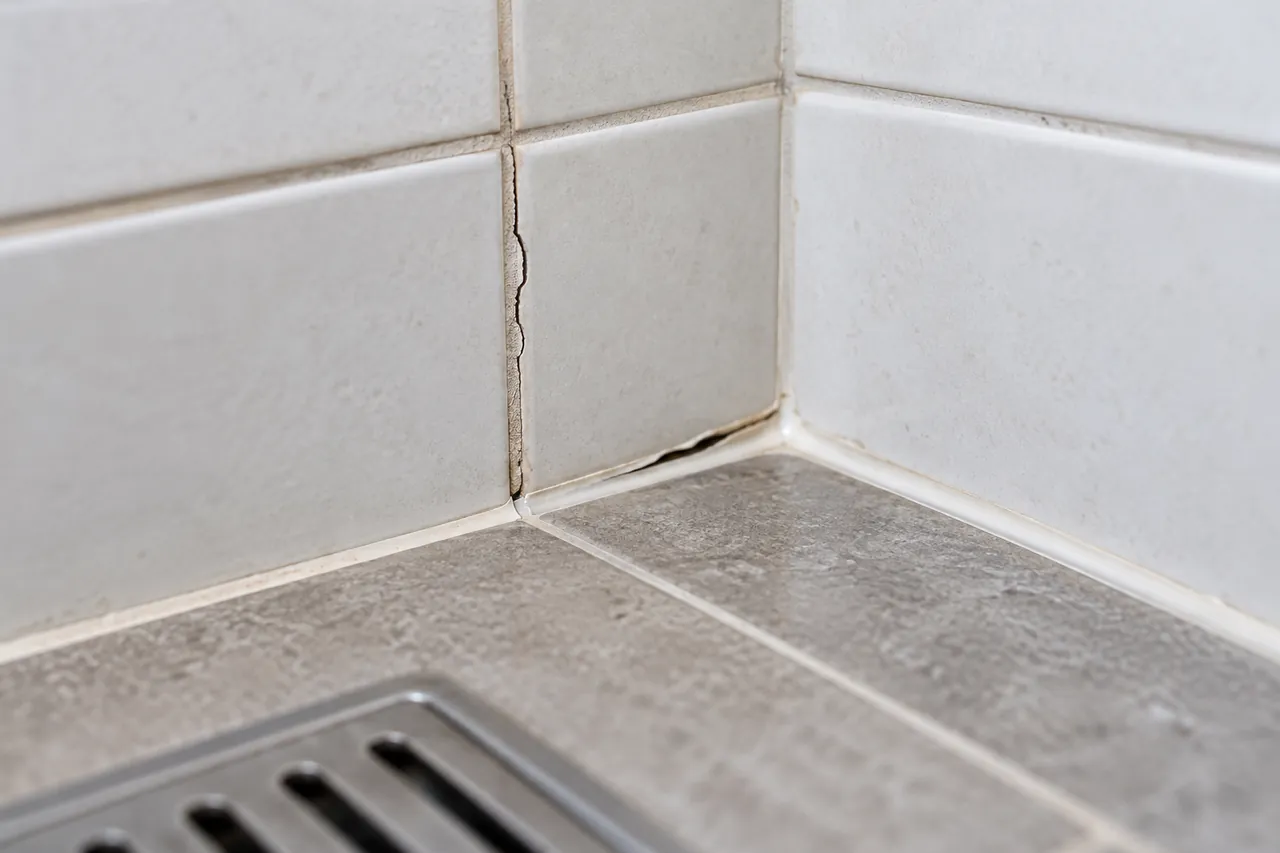
- Cracked or deteriorating grout.
- Loose, lifting or damaged tiles.
- Persistent dampness at a threshold, wall junction or balcony edge.
- Residue that repeatedly returns despite reasonable surface cleaning.
These signs still need to be interpreted carefully. Cracked grout or a stain can have more than one cause. The goal is to understand the source of moisture and the condition of the balcony assembly before choosing a repair.
What should I check if the deposits keep returning?
You can make useful observations without taking tiles up or conducting your own water test.
- Photograph the area. Take a close-up of the deposit and a wider photo showing where it appears on the balcony.
- Note the timing. Record whether the residue becomes more noticeable after rain or after the balcony has been wet.
- Look for pooling. Observe whether water remains in the same area or drains away slowly, without deliberately adding extra water.
- Check for other visible changes. Note loose tiles, deteriorating grout, damaged sealant or staining below the balcony.
- Avoid disturbing the tiled surface. Do not lift tiles, cut into the substrate or apply unverified chemical treatments to investigate.
- Arrange an assessment if concerns persist. A professional can consider the residue alongside drainage, visible damage and the balcony's construction.
If water is entering the building, damage is spreading, or a ceiling is bulging, seek prompt professional advice and keep clear of any unsafe area.
When should balcony waterproofing be checked?
It is sensible to arrange an assessment when white deposits keep returning and there are other signs of moisture, such as water staining below the balcony, loose tiles, deteriorating grout or recurring pooling. You may also want advice if you cannot determine whether the problem is surface residue or part of a broader moisture issue.
An assessment should consider the overall condition of the tiled surface and relevant drainage details rather than assuming that the membrane has failed based on one symptom. The appropriate response may be routine maintenance, a drainage-related repair, localised tile work or more extensive waterproofing work, depending on what is found.
For homeowners in Melbourne and Geelong, EverSeal's balcony waterproofing service is the relevant service page to explore if you suspect a wider moisture or waterproofing issue. General waterproofing services may also be relevant depending on the location and cause. The repair scope should follow an assessment, not the appearance of the white deposit alone.
Frequently asked questions
What is the white powder on balcony tiles?
It may be efflorescence: a deposit of soluble salts left behind when moisture moves through a material and evaporates at the surface. Other residues can look similar, so appearance alone is not a definitive identification.
Is white salt on balcony tiles dangerous?
Efflorescence is generally a visible symptom rather than a diagnosis of structural damage. The more important question is why moisture is moving through the area and whether there are other signs of deterioration or water ingress. Persistent deposits with damaged tiles, grout or staining below the balcony should be assessed.
Does efflorescence mean my balcony waterproofing has failed?
No. It can be associated with moisture movement, but it does not prove that the waterproofing membrane has failed. Drainage, retained moisture and other conditions may also contribute. The full context needs to be considered.
Why does the white residue return after rain?
Rain may contribute moisture that moves through the tiled surface or underlying materials. When that moisture evaporates, salts can remain at the surface. If the residue keeps returning, note where and when it appears and consider an assessment of moisture movement and drainage.
Can I use vinegar or an acid cleaner on balcony efflorescence?
Do not assume that an acid cleaner is suitable. Cleaning products can damage some tile finishes, grout, metals and adjacent materials. Follow the manufacturer's guidance for the specific surface and product, and avoid unverified chemical mixtures. If the residue is persistent or the cause is unclear, seek advice before using a stronger cleaner.
When should I call a balcony waterproofing professional?
Consider an assessment if the deposits recur, water pools or drains slowly, tiles are loose, grout is deteriorating, or stains or dampness appear below the balcony. These signs do not prove membrane failure, but they justify looking into the moisture source.