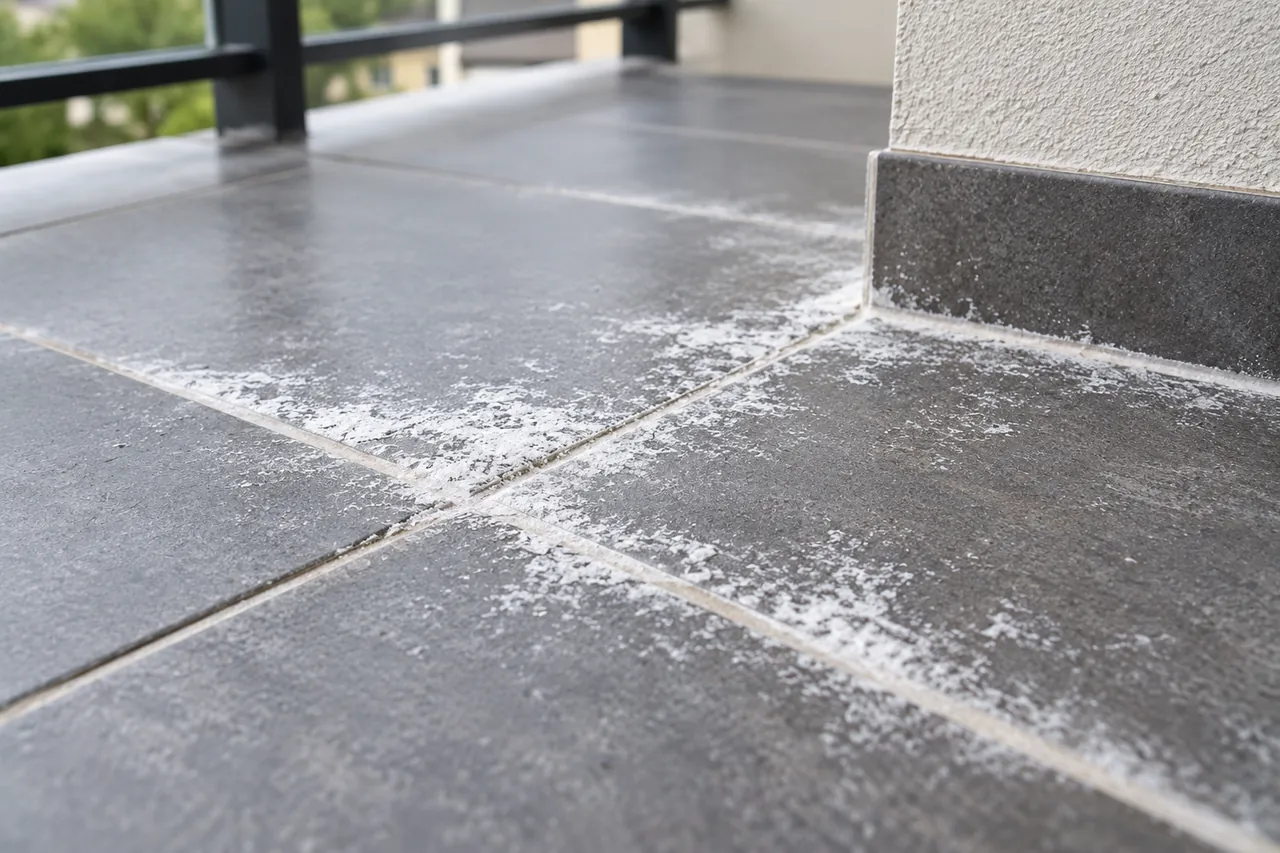

A shower can leak behind its tiles even when there is no obvious puddle on the bathroom floor. Damp or musty smells, loose tiles, deteriorating grout, peeling paint, or a water stain on the ceiling below may be clues. These are common signs of a leaking shower, but none of them proves the shower is the source on its own.
Water may be escaping through a failed seal, a plumbing connection, a damaged waterproofing system, or another part of the building. The important step is to notice where and when the symptoms appear, avoid disturbing the affected area, and arrange an assessment if the signs persist or worsen.
Common signs of a leaking shower
1. A persistent damp or musty smell
If the bathroom smells damp even after it has been cleaned and ventilated, moisture may be lingering somewhere it cannot dry properly. That could be behind a wall, beneath the shower floor, around a seal, or in another damp area of the bathroom.
A smell alone is not a diagnosis. Poor ventilation and condensation can also leave a bathroom musty. Pay attention to whether the smell becomes stronger after showering or continues even when the room has had time to dry.
2. Peeling paint, bubbling plaster or a damp wall
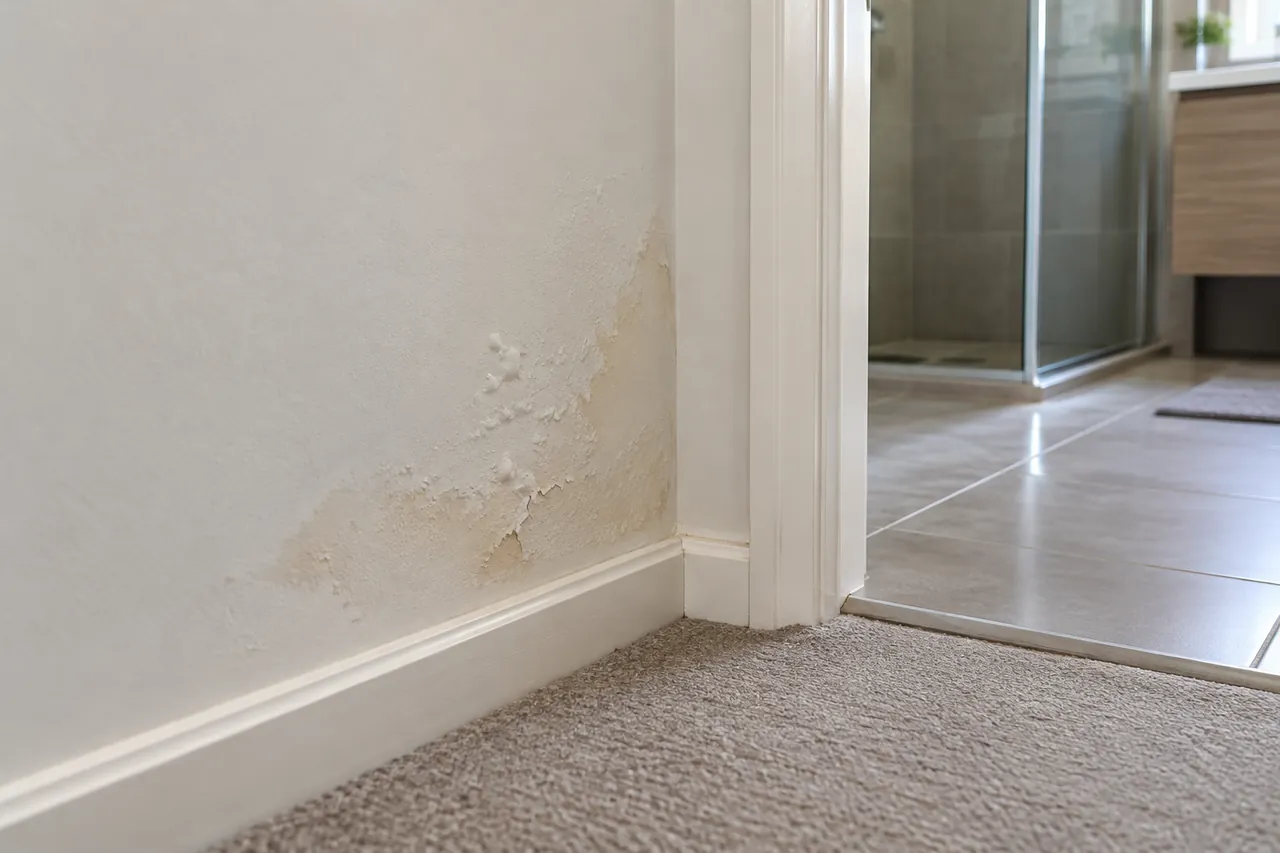
Paint that bubbles, flakes or lifts near the shower can indicate moisture in the wall or the material behind the paint. You may also notice discolouration, soft plaster, or a patch that repeatedly returns after the surface appears to dry.
A damp wall next to the shower can have several causes, including a leaking pipe, water escaping from the shower area, or condensation. The location of the patch and its relationship to shower use can help a professional narrow down the possibilities.
Do not scrape away damaged paint or open the wall just to investigate unless you know it is safe to do so. If the area is spreading, feels soft, or is close to electrical fittings, seek appropriate professional advice promptly.
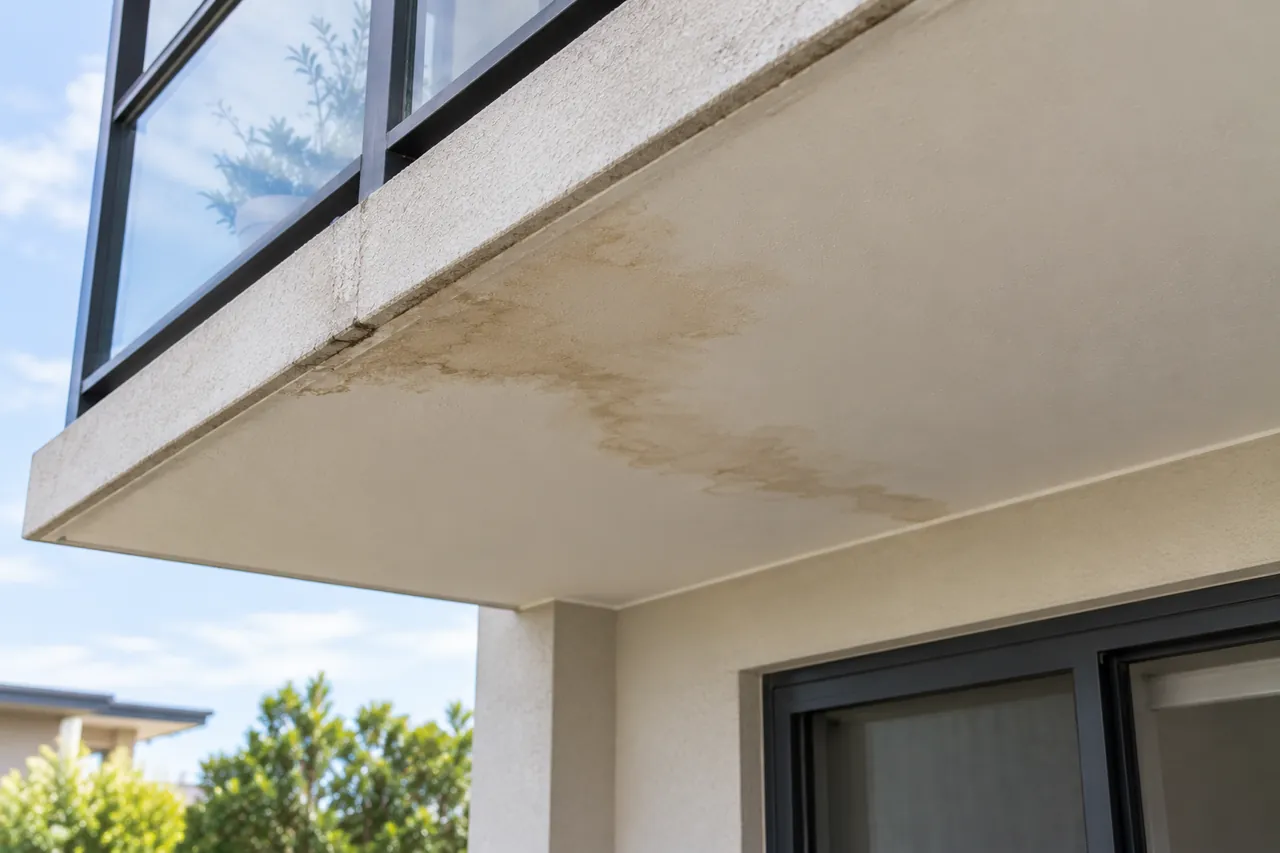
3. Water stains on the ceiling below the bathroom
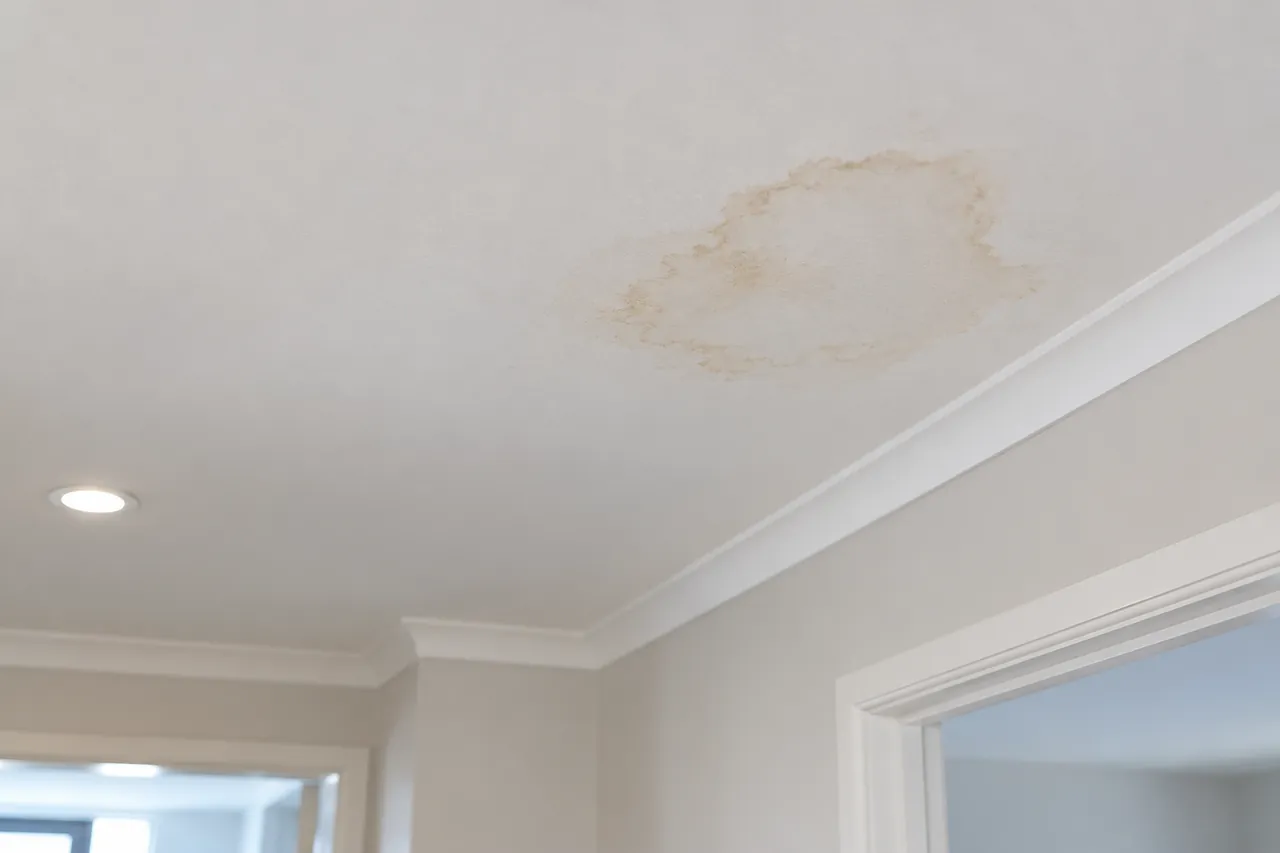
A brown or yellow ceiling mark, bubbling ceiling paint, or a drip below an upstairs bathroom deserves attention—especially if it appears or becomes more noticeable after the shower is used.
A shower base leaking through the ceiling is one possible explanation, but the water could also be coming from a supply pipe, a waste connection, or another plumbing fixture. Water can travel along building materials before it becomes visible, so the stain may not sit directly beneath the source.
If water is actively dripping, the ceiling is sagging, or the affected area is near electrical equipment, stop using the shower and seek urgent assistance. Do not touch a wet light fitting or stand beneath a visibly bulging ceiling.
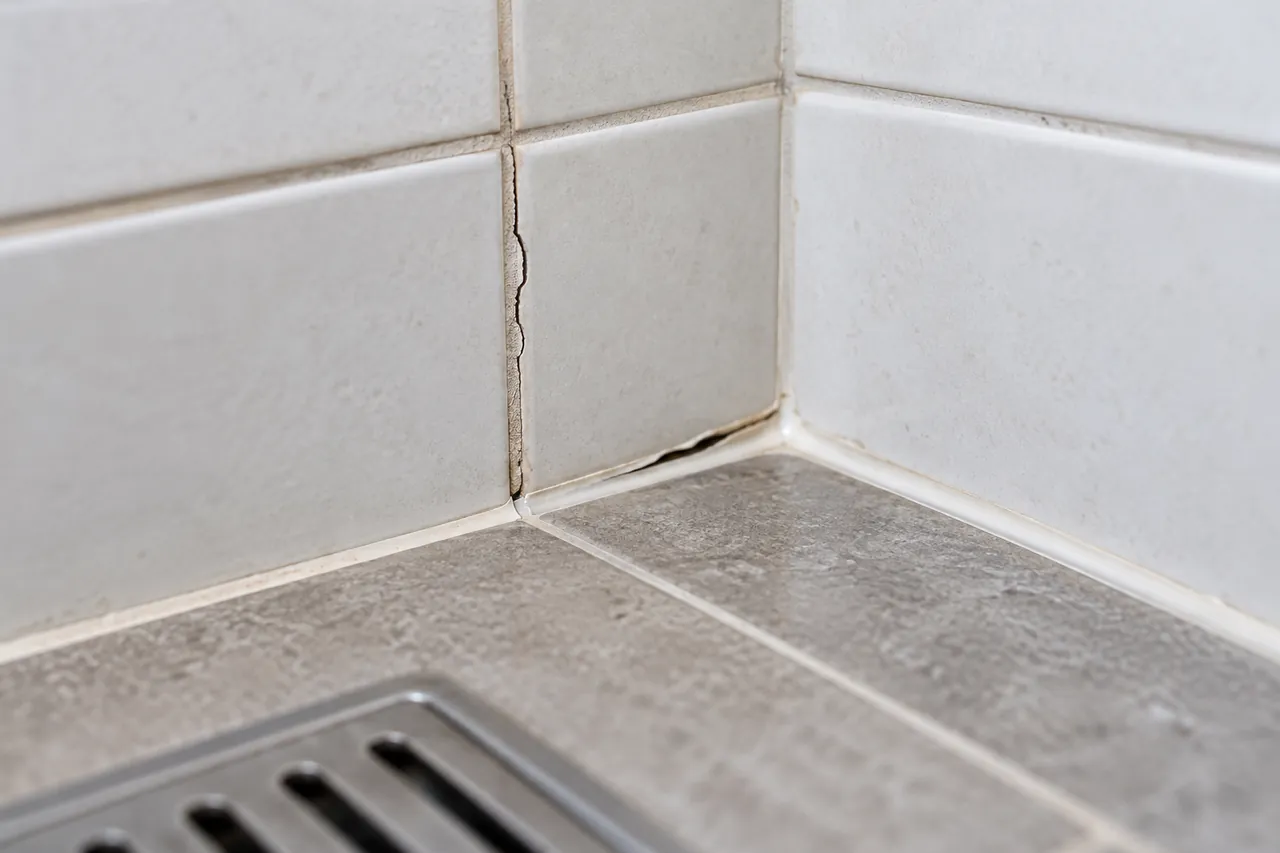
4. Cracked or missing grout
Grout fills the joints between tiles. Cracks, gaps or missing sections can let water reach the layers beneath the tile surface more easily, depending on how the shower is built and the condition of the waterproofing system.
However, grout is not the waterproofing membrane. A cracked grout line does not automatically mean the membrane has failed, and intact grout does not guarantee that the shower is watertight. Treat damaged grout as a reason to investigate and maintain the area—not as a definitive leak test.
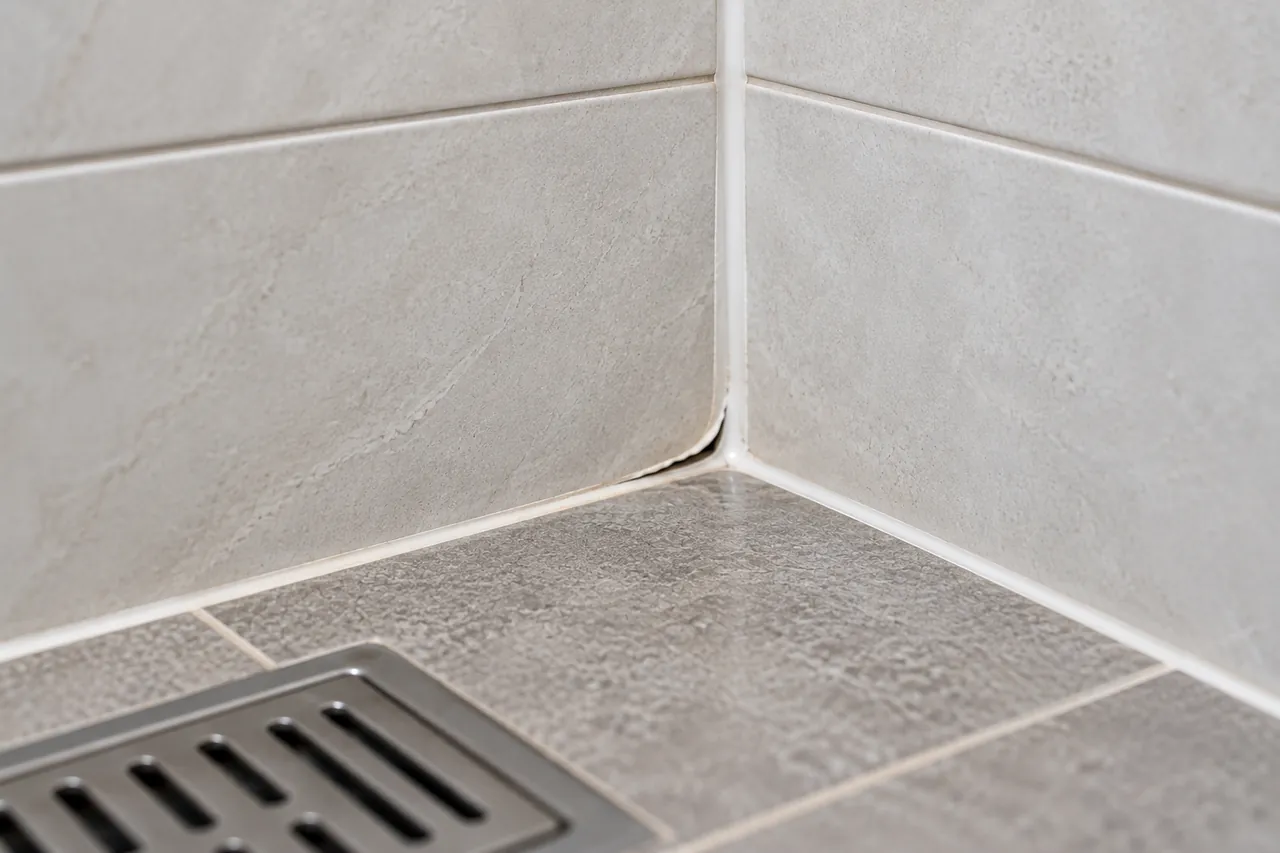
5. Silicone that has split, lifted or pulled away
Silicone sealant is commonly used at changes of plane and around certain shower joints. Over time, it can shrink, split, peel away or lose adhesion. Gaps around the shower screen, tray or wall junction may allow water to escape from the intended wet area.
Look for sections that have separated from the surface, visible gaps, or sealant that has deteriorated. Avoid simply applying a new layer over old, damp or mouldy silicone. The joint needs to be assessed and prepared appropriately, and resealing will not solve every type of leak.
If the issue appears limited to sealant, the relevant service may be silicone sealing. If there are other warning signs, a broader assessment may be needed.
6. Loose, hollow-sounding or lifting tiles
Tiles that move, lift or appear to be separating from the wall or floor can indicate a problem with the tile bond or the material beneath them. Moisture may be involved, but poor adhesion, movement or other installation issues can also contribute.
Do not pull up a tile to check what is underneath. Removing it can cause further damage and may not reveal the original source of the problem. A professional can consider the visible symptoms alongside the shower's construction and any history of leaks or repairs.
7. Water appearing outside the shower area
Water repeatedly appearing beyond the shower screen, around the bathroom doorway, or at the edge of the shower after use may point to a screen, seal, drainage or water-containment issue.
First consider ordinary splash-out: a poorly positioned shower head or an open screen can send water onto the floor without a concealed leak. If water continues to appear when normal splash-out has been ruled out, or nearby finishes begin to deteriorate, arrange an assessment.
Can water leak behind tiles without a visible puddle?
Yes. Water can enter a concealed space and travel through or along building materials before a visible mark appears. It may collect behind a wall finish, reach the ceiling below, or remain hidden for some time. That is why the absence of a puddle does not rule out a leak.
At the same time, hidden moisture should not be assumed simply because one tile or grout joint looks imperfect. The symptoms need to be considered together, including their location, how long they have been present, and whether they change after the shower is used.
Does cracked grout always mean the shower is leaking?
No. Grout can crack because of movement, wear, poor adhesion or other causes. A crack can be a pathway for water, but it does not establish that water has passed through the waterproofing system or that the membrane has failed.
The same caution applies in reverse: grout may look sound while a leak exists elsewhere, such as at a plumbing connection or a seal. If cracked grout appears alongside damp smells, loose tiles, damaged paint or stains outside the shower, it is sensible to have the whole situation assessed rather than treating the grout in isolation.
Where the problem is limited to worn grout, shower regrouting may be relevant. The right scope depends on the cause and condition of the area.
Is it a shower leak, a plumbing leak or condensation?
These problems can look similar, so use the observations below as clues—not as a way to make a final diagnosis.
| What you notice | Possible explanations | What to note |
|---|---|---|
| A damp patch becomes more noticeable after showering | Water escaping from the shower area, a plumbing issue, or water moving through surrounding materials | When the patch appears and how it changes |
| A ceiling stain or drip below an upstairs bathroom | Shower-related leak, pipework, waste connection, or another fixture | Whether it changes after shower use; whether it is actively dripping |
| Condensation on mirrors, windows or cold surfaces | Humidity and ventilation conditions | Whether it clears with ventilation and whether other damage is present |
| Cracked grout or separated silicone | Wear, movement, a failed joint, or a possible water-entry point | Exact location, length of time present, and any nearby damage |
| A persistent musty smell | Trapped moisture, poor ventilation, or another damp source | Whether it is localised and whether it worsens after showering |
Do not carry out improvised water tests, flood the shower base, or deliberately direct water at suspected gaps to see what happens. If a leak is present, extra water may worsen the damage.
What to do if you suspect a leak behind the tiles
A few simple steps can make an assessment more useful without disturbing the affected area.
- Record the symptoms. Note the location of any stain, damp patch, damaged grout or separated silicone.
- Take clear photos. Photograph the affected area and, where relevant, the ceiling or wall on the other side. Include a wider view as well as a close-up.
- Note the timing. Write down whether the problem appears after showering, after other plumbing is used, or regardless of water use.
- Avoid disturbing the area. Do not pull off tiles, cut into walls, or cover the signs with fresh sealant before the cause is understood.
- Limit use if the signs are worsening. If water is actively escaping or damage is spreading, stop using the shower until you have obtained appropriate advice.
- Arrange an assessment. A qualified professional can help determine whether the likely issue relates to the shower enclosure, plumbing, seals, waterproofing system or another source.
If water is actively leaking, a ceiling is sagging, or water is near electrical fittings, treat the situation as urgent and keep clear of the affected area.
When should you contact a professional?
Arrange an assessment when you notice repeated dampness, a persistent musty smell, loose or lifting tiles, deteriorating finishes outside the shower, or a stain on the ceiling below. It is particularly important to act promptly if the signs are spreading or water is actively escaping.
You do not need to wait until damage becomes extensive before asking for advice. Equally, not every cracked grout line requires a full shower rebuild. The appropriate repair depends on the actual cause, the condition of the surrounding materials, and whether the waterproofing system is performing as intended.
EverSeal's leaking shower repairs service is the relevant starting point for homeowners in Melbourne and Geelong who want to discuss suspected shower leaks. If the symptoms point towards a broader wet-area issue, waterproofing services may also be relevant. The service scope should be determined after the problem has been assessed rather than assumed from a symptom alone.
Frequently asked questions
How can I tell if my shower is leaking behind the tiles?
Look for a combination of clues: a persistent damp smell, damaged grout or silicone, loose tiles, bubbling paint near the shower, or stains on the ceiling below. These can indicate moisture, but they do not confirm the source. A professional assessment is the safest way to narrow it down.
Can a shower leak happen without water showing on the bathroom floor?
Yes. Water may escape into a concealed area and travel through building materials before it becomes visible. A shower can also have a plumbing leak that does not leave water on the bathroom floor. No visible puddle does not rule out a problem.
Should I keep using a shower if I suspect it is leaking?
If water is actively escaping, damage is spreading, or there is a ceiling stain or sagging below, stop using the shower and seek advice promptly. If the signs are minor and there is no active leak, avoid unnecessary water exposure while arranging an assessment. Any immediate electrical or ceiling safety concern should be treated urgently.
Will replacing the grout fix a leaking shower?
Not necessarily. Regrouting may address worn or damaged grout, but it will not repair every possible cause of a leak. A plumbing fault, failed seal or problem with the waterproofing system may need a different solution. Identify the likely cause before choosing the repair.
Does a ceiling stain directly below a shower prove the shower is leaking?
No. It is an important warning sign, but water could come from pipework, a waste connection or another fixture. Water can also travel before it becomes visible. The source needs to be assessed.
Who should I contact for leaking shower repairs in Melbourne or Geelong?
Choose a suitably qualified professional who can assess the symptoms and explain the likely scope of work. Share photographs, when the symptoms occur, and any previous repair history. For EverSeal, start with the leaking shower repairs page.